
Stand in front of a perfume shelf and you will see the same scent wearing four different names: parfum, eau de parfum, eau de toilette, cologne. The liquid inside is related, sometimes nearly identical in smell, yet the prices and the staying power are not. The difference is concentration, and once you understand it, those little words on the box stop being decoration and start being information.
What is perfume made of?
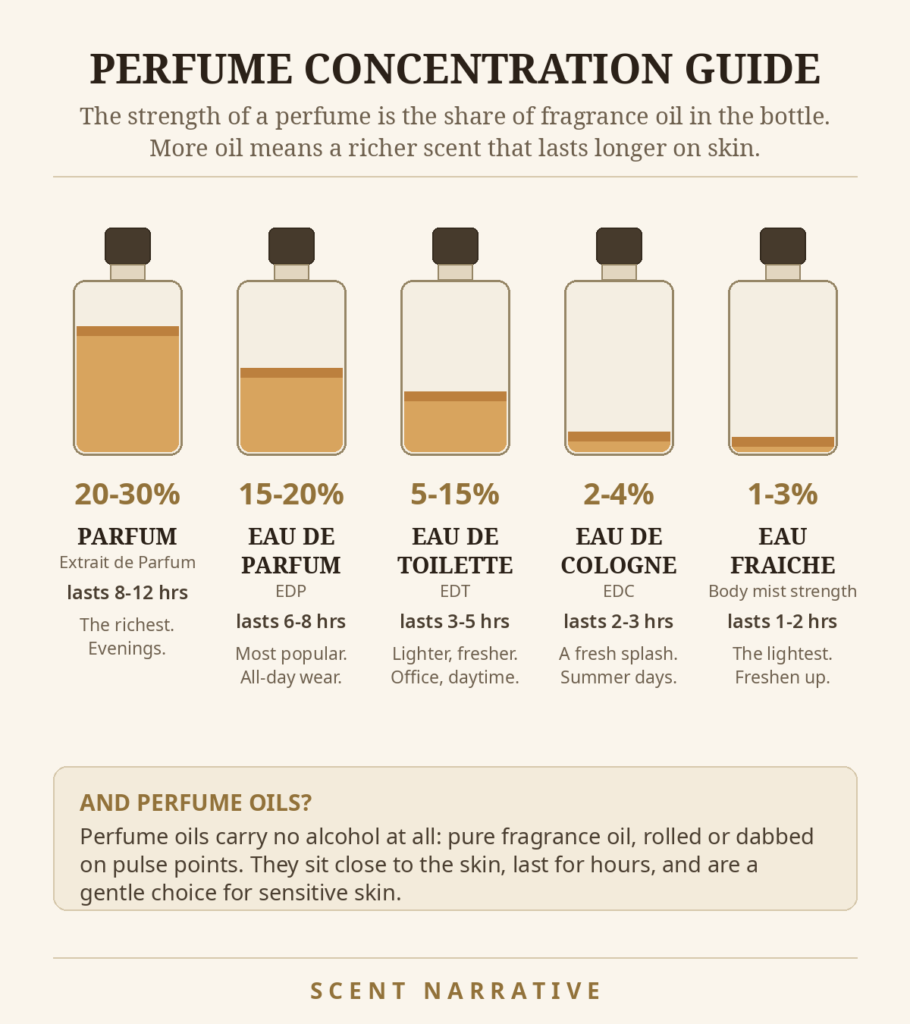
Every spray perfume is a blend of three things. The first is the fragrance oil, the scented concentrate a perfumer builds from natural extracts and aroma molecules. The second is alcohol, which carries the scent, lifts it off the skin and creates the trail other people notice. The third is a small amount of water and fixatives that soften the blend and help it last.
Concentration simply means how much of the bottle is fragrance oil. In a typical eau de parfum, the oil is about 15 to 20 percent of the liquid. Raise that share and the scent becomes richer and longer lasting. Lower it and the scent becomes lighter, fresher and shorter lived. That single number quietly decides how a perfume behaves all day.
The five levels, from strongest to lightest
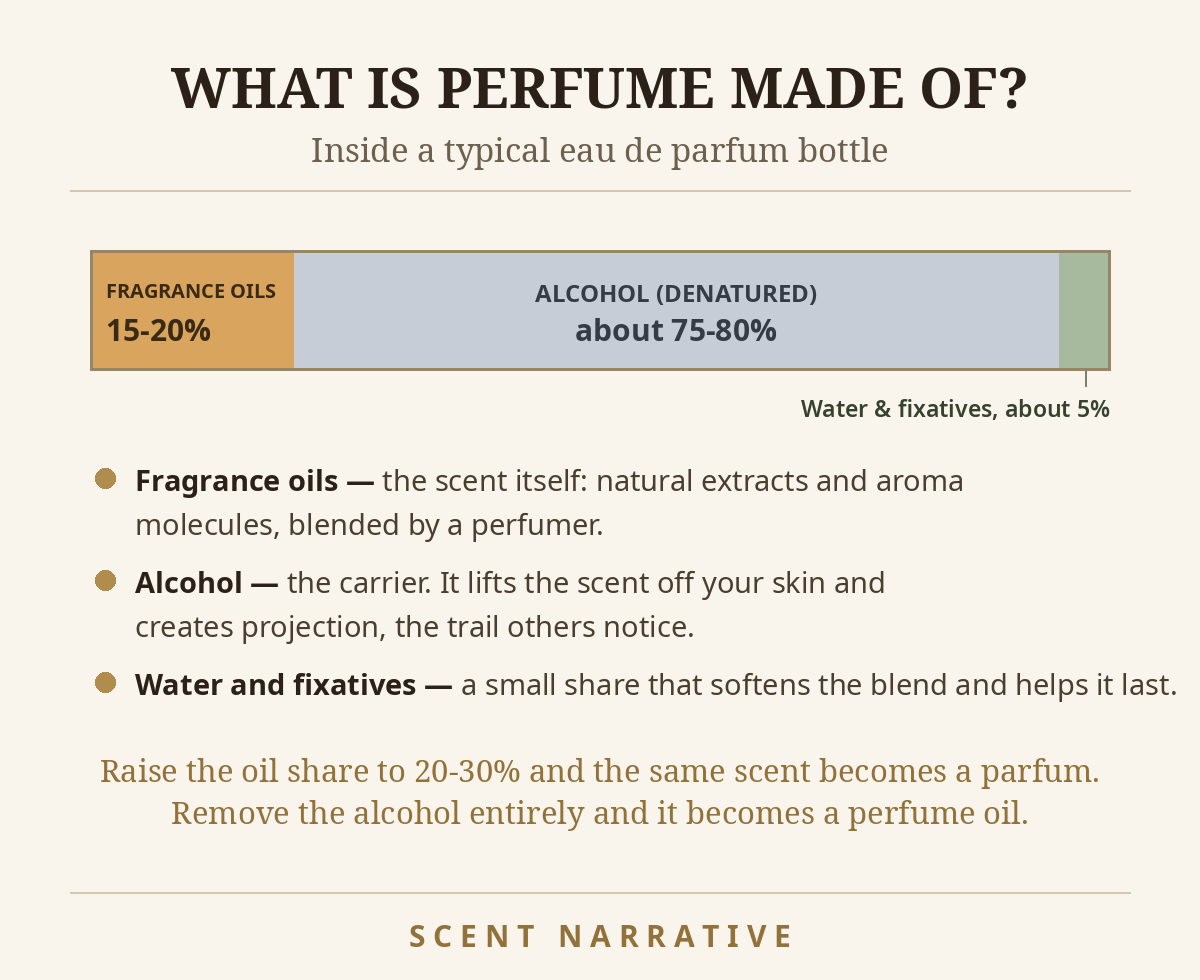
Parfum, also called extrait de parfum: 20 to 30 percent oil. The richest form of a fragrance and usually the most expensive per bottle, though you use less of it. A parfum sits close and deep rather than loud, and on skin it can last 8 to 12 hours. It is the evening and special occasion choice, and the one collectors reach for.
Eau de parfum (EDP): 15 to 20 percent oil. The most popular strength in modern perfumery, and the one most designer and niche releases are sold in. It balances presence and wearability, typically lasting 6 to 8 hours, which is why it suits daily wear for most people. When a review on this site talks about longevity, it is usually judging an eau de parfum.
Eau de toilette (EDT): 5 to 15 percent oil. Lighter and brighter, with the fresh top notes pushed forward and the heavy base softened. An eau de toilette usually lasts 3 to 5 hours. It is the classic office and daytime strength, and in hot weather many people prefer it even when an eau de parfum version exists.
Eau de cologne (EDC): 2 to 4 percent oil. A fresh splash rather than a lasting statement: citrus, herbs and clean notes that glow for 2 to 3 hours and then fade. Traditional colognes were never meant to last all day. They are the after-shower, summer morning refresh.
Eau fraiche: 1 to 3 percent oil. The lightest of all, close to a scented body mist. Expect 1 to 2 hours of soft freshness. It is a gentle way to wear a scent when anything stronger would be too much.
And then there are perfume oils
Perfume oils remove the alcohol completely. What remains is the fragrance oil itself, sometimes blended into a neutral carrier oil, applied with a rollerball or a dab on the pulse points. Because there is no alcohol to lift the scent into the air, an oil wears close to the skin: intimate rather than projecting. In return it can last for many hours, and many people with sensitive skin find oils gentler than sprays. Oils and sprays of the same scent can smell surprisingly different, because alcohol shows you the sparkling top notes first, while an oil takes you straight to the warm heart and base.
Does stronger always mean better?
No, and this is the part the shelf never tells you. A higher concentration changes the balance of a scent, not just its strength. The parfum version often feels rounder and deeper, with the base notes turned up. The toilette version can feel cleaner and more sparkling, with the citrus and florals in front. Neither is the correct one. There is also your skin and your climate to consider: oils in a formula cling longer on moisturised skin, heat makes every scent project further, and a strength that feels elegant in winter can feel heavy in August.
How to choose, quickly
For all-day wear with one morning application, choose an eau de parfum. For evenings and occasions, or if your skin eats fragrance quickly, choose a parfum. For the office, daytime and hot weather, an eau de toilette is usually the polite and comfortable pick. For a fresh start to the day, cologne and eau fraiche do their short job beautifully. And if you want scent that stays close and personal, try a perfume oil.
Read the small word on the box before you judge the price tag. Two bottles of the same perfume are not the same product, and now you know exactly why.